
You're running out of space
New products and incoming stock take up more room. Move your goods to an external warehouse and free up space at your premises.
Your outsourced warehouse in Umbria, Italy
Space for your products. Control over your stock.
Let Umbria Hub handle goods receiving, storage and inventory. We look after your products while you follow stock levels and movements in My Umbria Hub.
Also available for storage and stock management only.
When warehousing becomes a priority
New products and incoming stock take up more room. Move your goods to an external warehouse and free up space at your premises.
Product launches, promotions and replenishment need space planned ahead. We assess average stock, peaks and delivery frequency with you.
More products, variants and movements make stock harder to follow. Recorded inventory helps you see what you have and what needs reordering.
Storage and warehouse locations
An outsourced eCommerce warehouse is a facility run by an external operator to receive, store and maintain your store's inventory. At Umbria Hub, we organise storage around your products' dimensions, packaging, quantities and turnover.
A CCTV-monitored warehouse with controlled access and insurance cover under the agreed terms. The proposal sets out storage arrangements, responsibilities and the cover applicable to your goods.
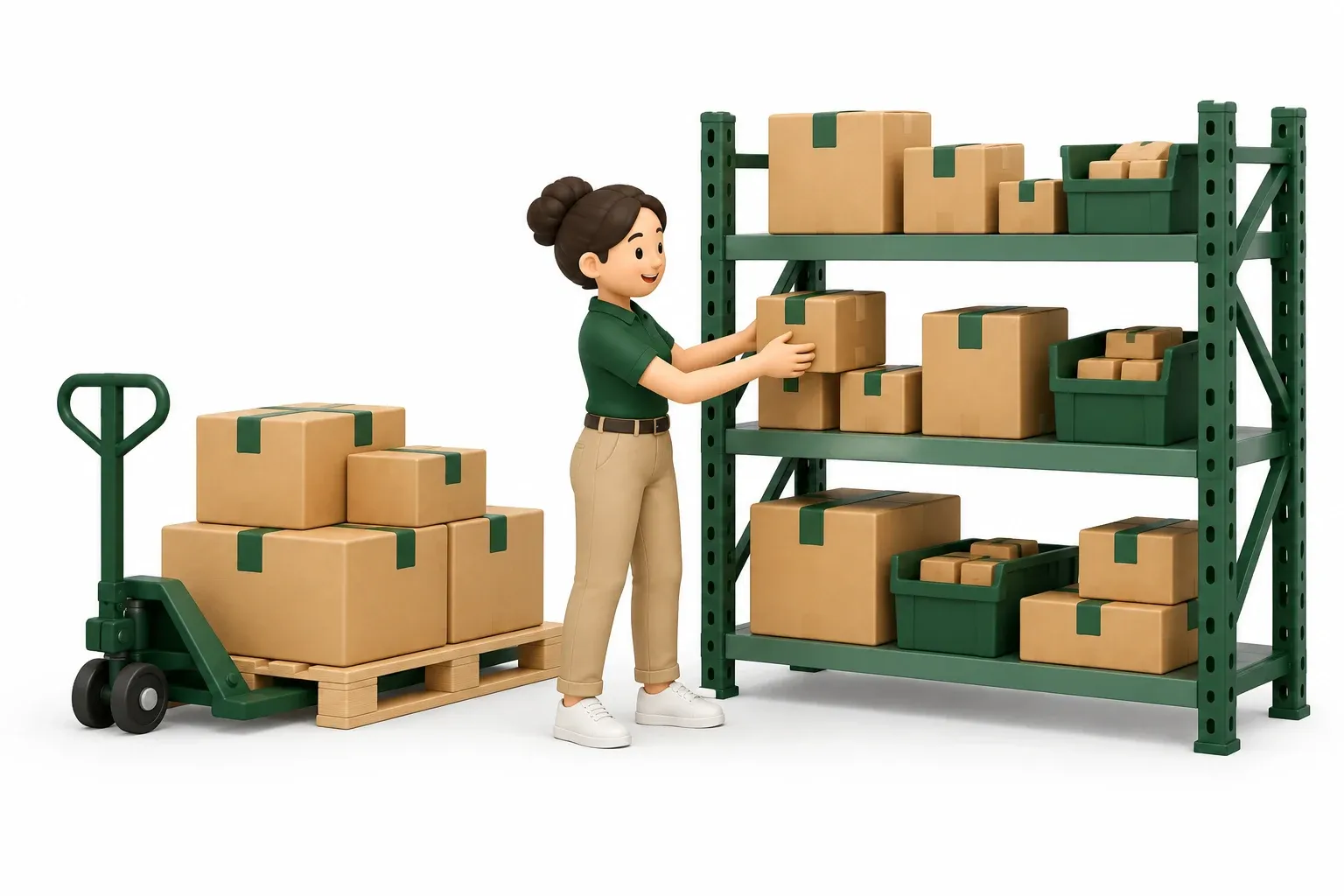
Pallets and cartons for bulk stock. We agree receiving and handling arrangements based on your goods.
Identifiable locations keep products and variants separate, making items easier to find, count and move.
Organised spaces separate smaller products and components according to your catalogue and handling requirements.
Goods receiving
Warehouse control starts when products arrive. Your supplier can deliver directly, or you can transfer goods from your own premises, with receiving details agreed in advance.
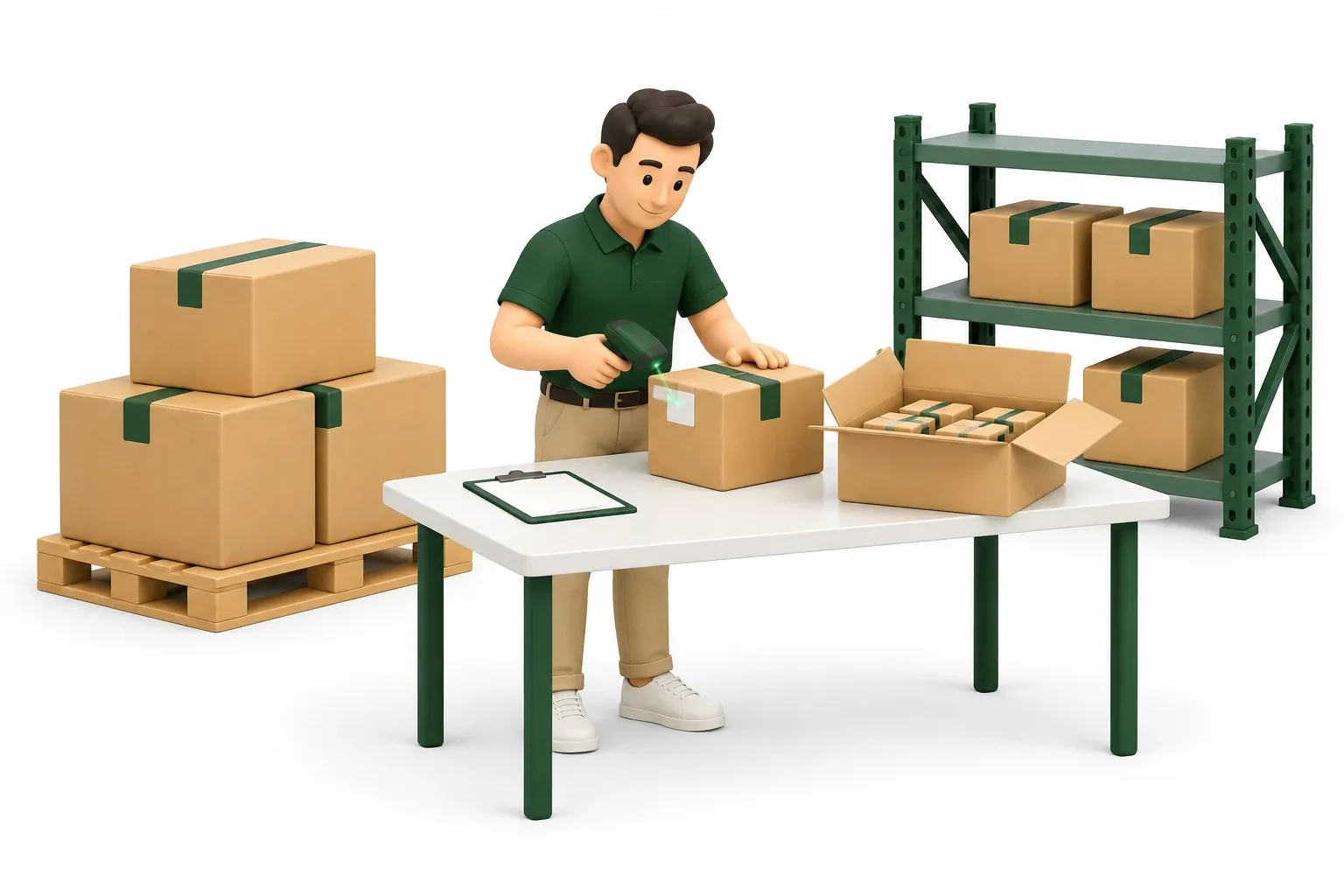
Share product details, expected quantities, codes and packaging. We organise receiving for pallets, uniform or mixed cartons and individual items.
We check quantities and condition under the agreed instructions, register the products and handle any discrepancies.
We place goods in their storage locations and update stock records in the WMS, our warehouse management software.
You can add a quality check with photos to assess the condition of incoming products.
Inventory and stock rotation
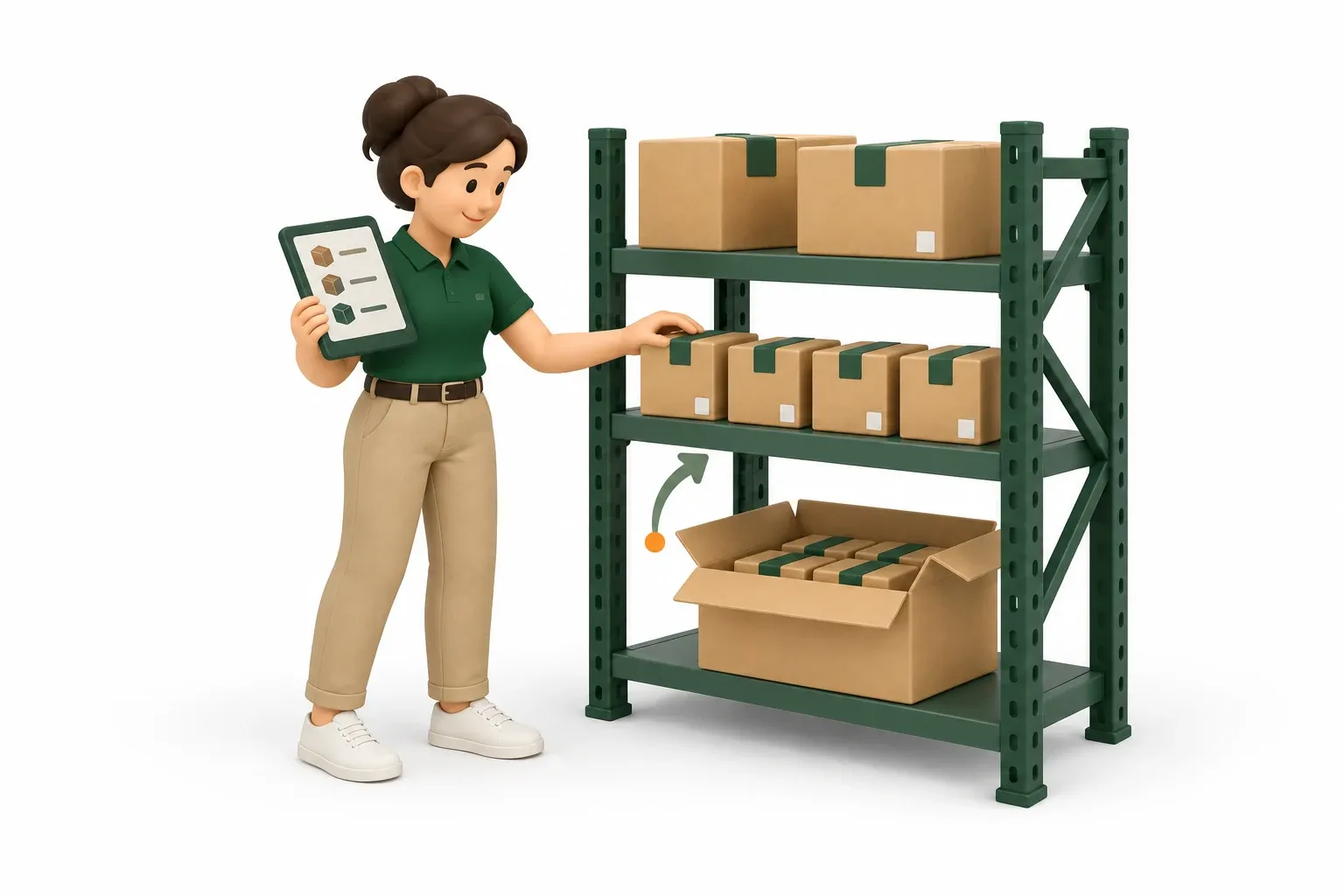
Stock management continues after goods are stored: we record movements, check quantities and organise product rotation.
We compare physical quantities with recorded inventory and handle discrepancies. The reconciliation service includes an email notification about stock checks.
FIFO moves the first goods received first. For products with batches and expiry dates, we use FEFO, prioritising the earliest expiry.
Stock records, movements and low-stock notifications help you decide when to replenish the warehouse and plan upcoming deliveries.
You stay in control
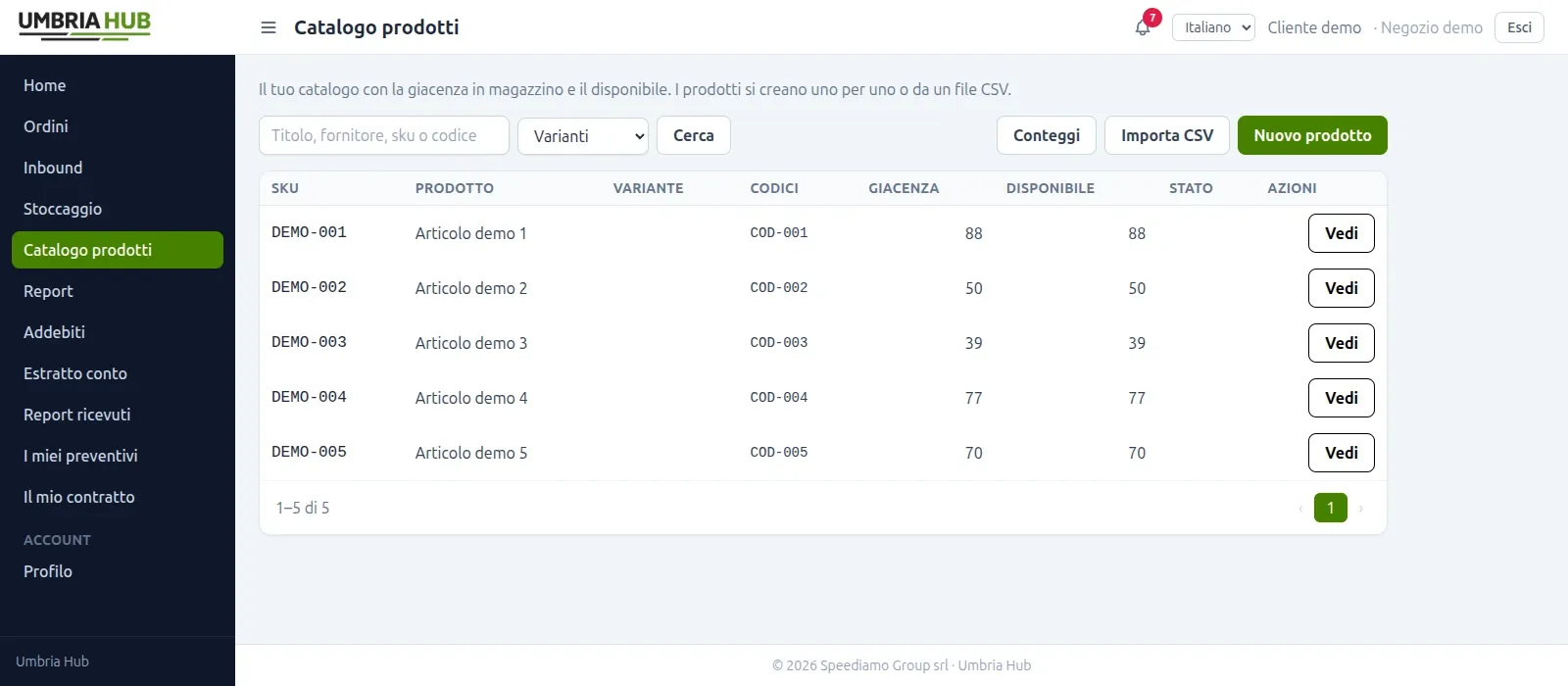
My Umbria Hub is the portal for following your warehouse operations. Consult your catalogue, distinguish physical stock from available quantities and review movement history.
Choose the scope of your service
Let us handle goods receiving, storage and inventory management. We agree movements and outbound arrangements around your needs.
We assess storage for new products or seasonal stock alongside your in-house warehouse, with clear responsibilities for each facility.
You can add picking and packing. If you also want to delegate shipping and returns, our eCommerce logistics service coordinates the full workflow.
Explore our complete eCommerce logistics serviceA quote based on your stock
Cost depends on the space occupied, storage duration and the work needed on your goods. We define the applicable charges together so you can assess storage separately from order preparation.
Already have a product list? It's a useful starting point for our conversation.
FAQ
Yes. You can use Umbria Hub just for receiving, storage and stock control. Order preparation and other services can be added when needed; movements and outbound arrangements are agreed in the proposal.
We handle eCommerce products except food, which is currently outside our service. Before goods arrive, share their characteristics, dimensions, weight, packaging and storage requirements so we can define a suitable solution.
We assess product dimensions, quantities, packaging and turnover. We organise reserve stock on pallets, individual products on shelving and small items in bins, assigning identifiable locations for inventory management.
Yes. We manage batches and expiry dates under the agreed workflow. For non-perishable products we use FIFO, moving the first goods received first; for products with expiry dates we use FEFO, prioritising the earliest expiry.
In My Umbria Hub you can consult products, physical stock, availability and movements. The reconciliation service compares physical and recorded quantities and includes an email notification about stock checks. Reports and stock notifications help you plan replenishment.
Yes, we can assess storage for part of your inventory, new products or seasonal stock. Before launch, we define which products to entrust to Umbria Hub, how to record movements and how to divide work between the two warehouses.
We don't require minimum inbound volumes. Space and activities are defined around your products and needs. If you want to recover your goods, we agree timing, outbound arrangements and applicable costs, preparing their return to your chosen address.
Tell us what you sell, how much stock you manage and which activities you want us to handle. We'll build a warehousing proposal around your catalogue.